New concrete driveways
Excavation, base, forms, steel sized to the use, the pour, the finish, and control joints placed to manage cracking.
New concrete driveways in depth →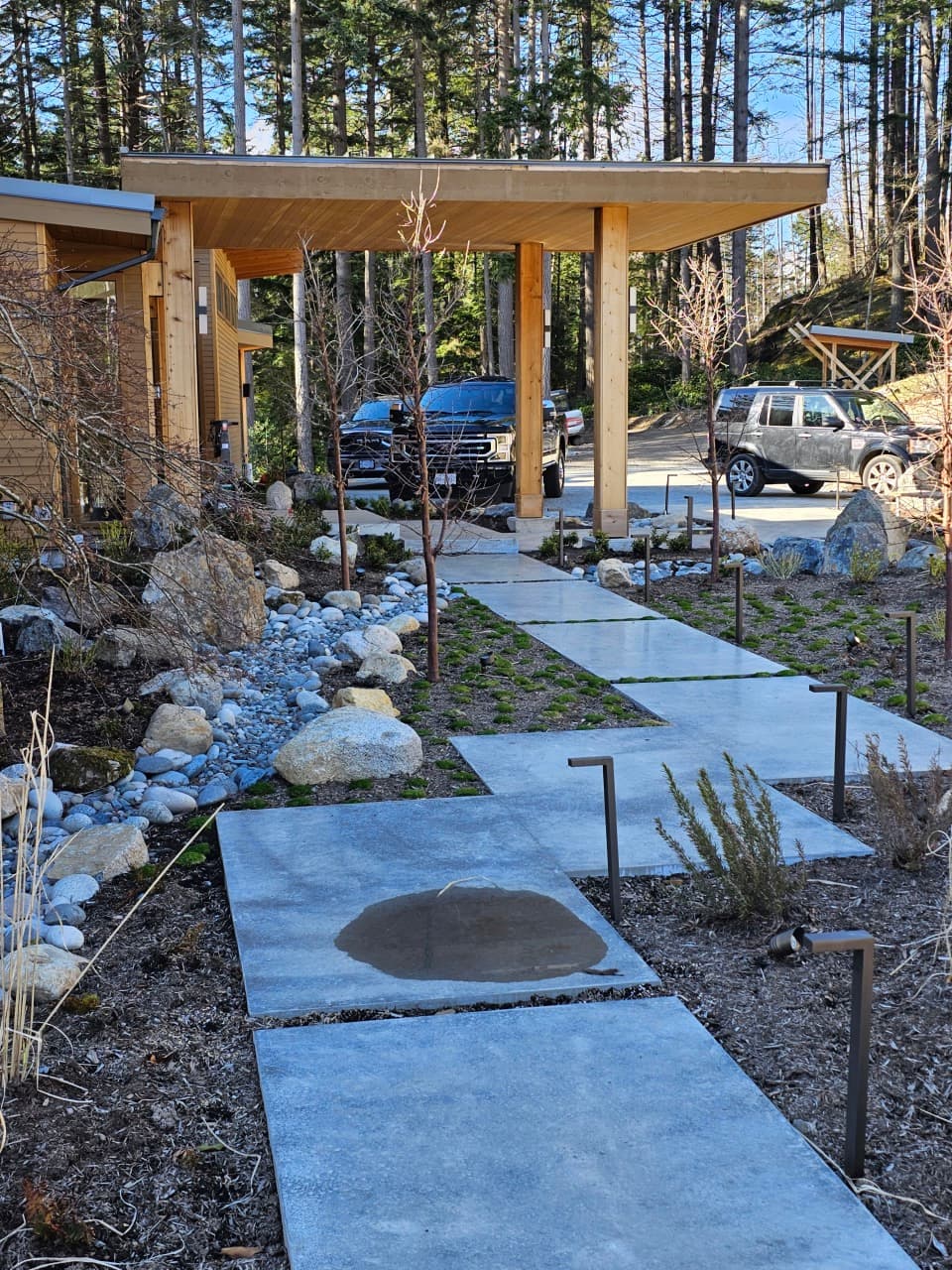
Concrete Driveways & Walkways
A lot of driveways here slope from the street to the garage, so grade and drainage have to be right before a yard of concrete goes down. We build new driveways, replace failed ones, and pour the aprons, walks and curbs that go with them.
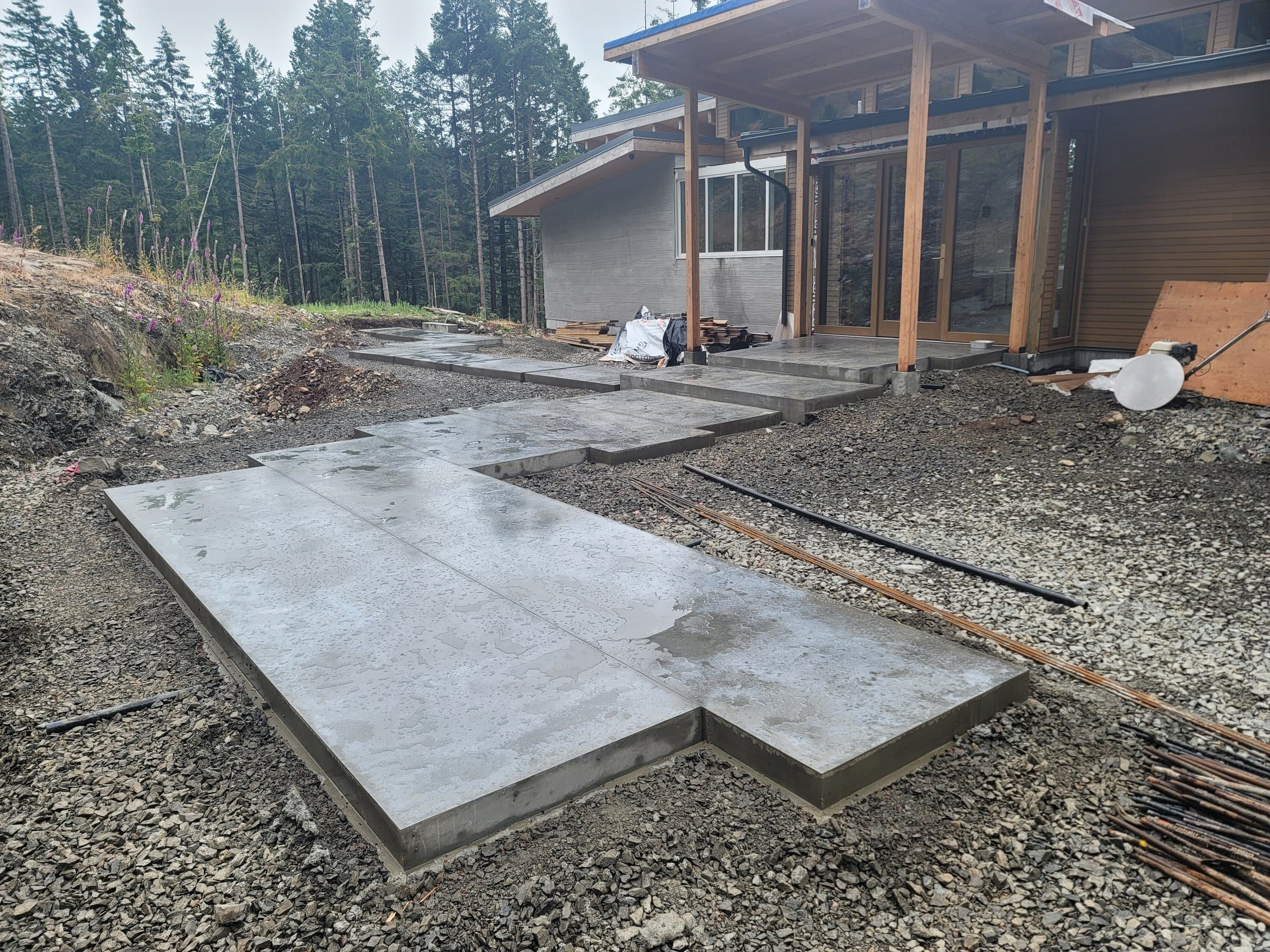
Stepping concrete walkway pads up to a covered carport. Bowen Island.
Excavation, base, forms, steel sized to the use, the pour, the finish, and control joints placed to manage cracking.
New concrete driveways in depth →Break-out, haul-away and, most important, fixing why the old one failed: a poor base, roots or bad drainage. Otherwise the new slab fails the same way.
The strip between your property line and the road, often over a ditch. In Maple Ridge it needs an application accepted by Engineering before work starts; the City sizes any culvert and the applicant pays for it.
Source: Maple Ridge Driveway Crossing, Culvert and Ditch Infill application
Even, sloped walks to the door or around the house. Where the walk needs steps with more than 2 risers, the BC Building Code gives them their own foundation.
Formed curbs that hold a driveway edge or separate lawn from beds, poured with the driveway or added after.
Asphalt usually costs less to put down. Concrete usually lasts longer, takes less upkeep, handles heat better and gives you finish options. The base under either one decides most of its life.
Work on the part of the driveway between the property line and the road needs an application to Maple Ridge Engineering. That includes new, widened or relocated driveways and ditch infills. One primary driveway is allowed per property; a second needs the Director of Engineering's approval. Driveways need 1.5 m clearance from the property line, hydrants and poles, and 2.0 m from street trees.
Source: Maple Ridge Driveway Crossing, Culvert and Ditch Infill application
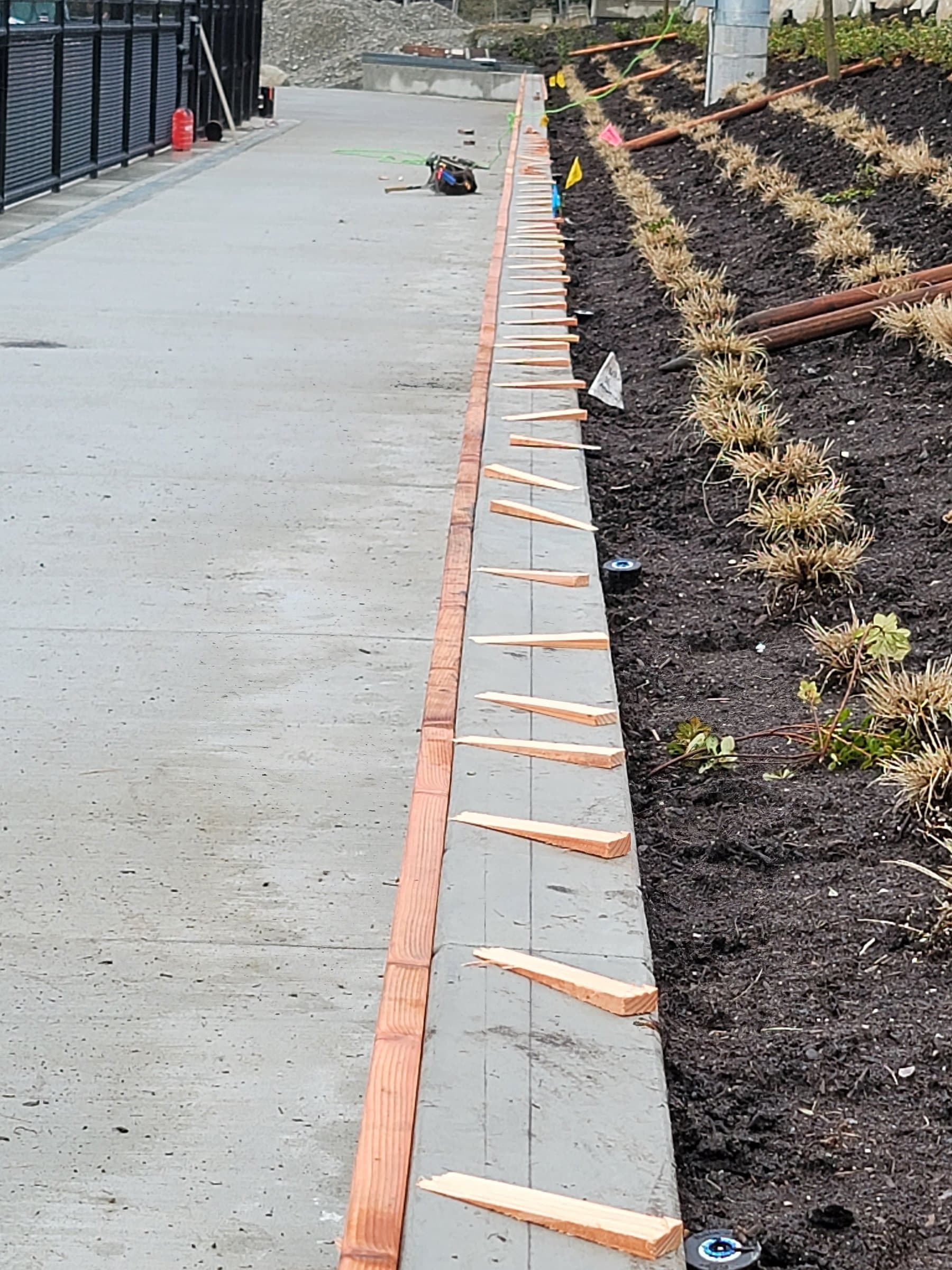
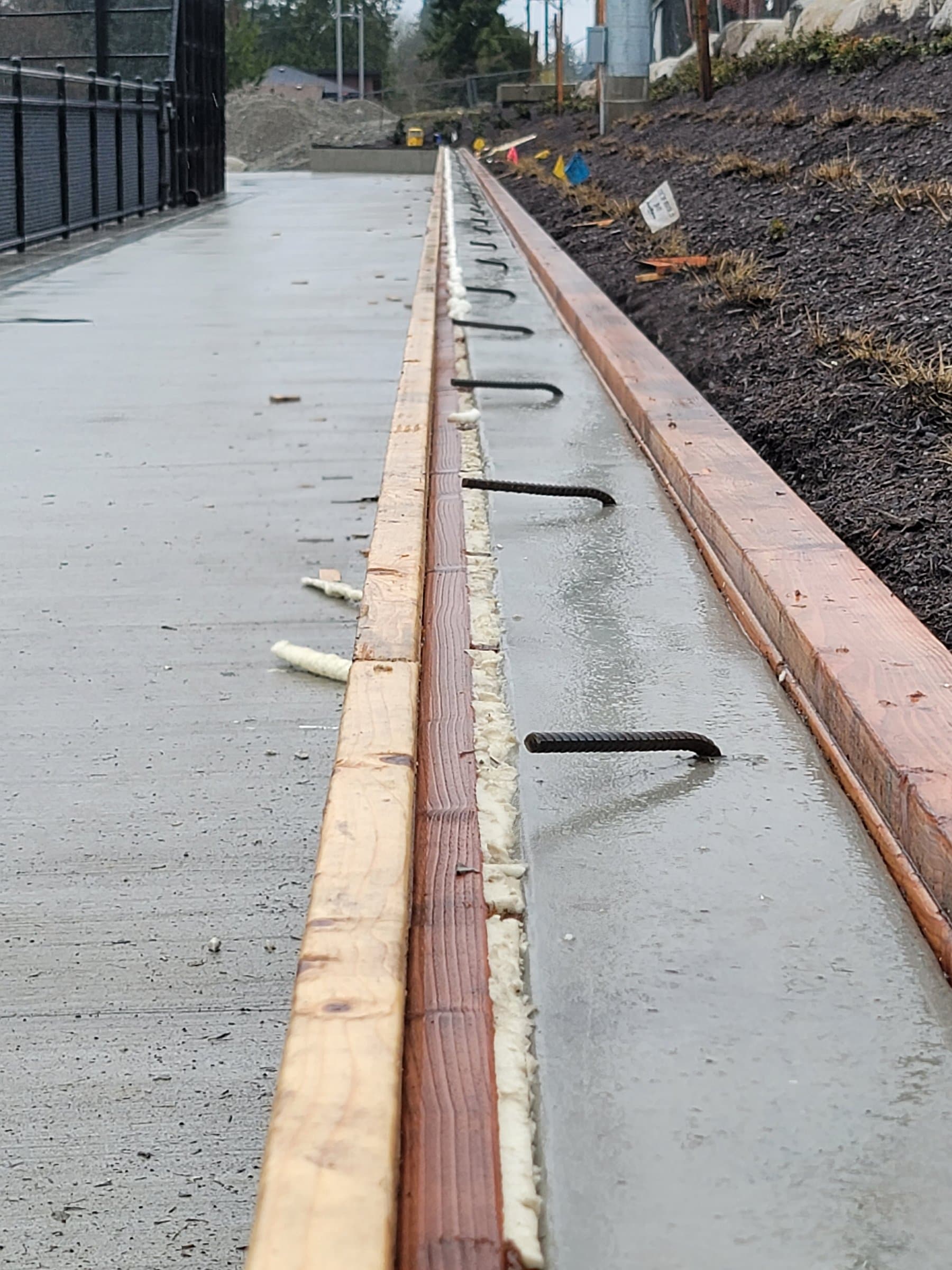
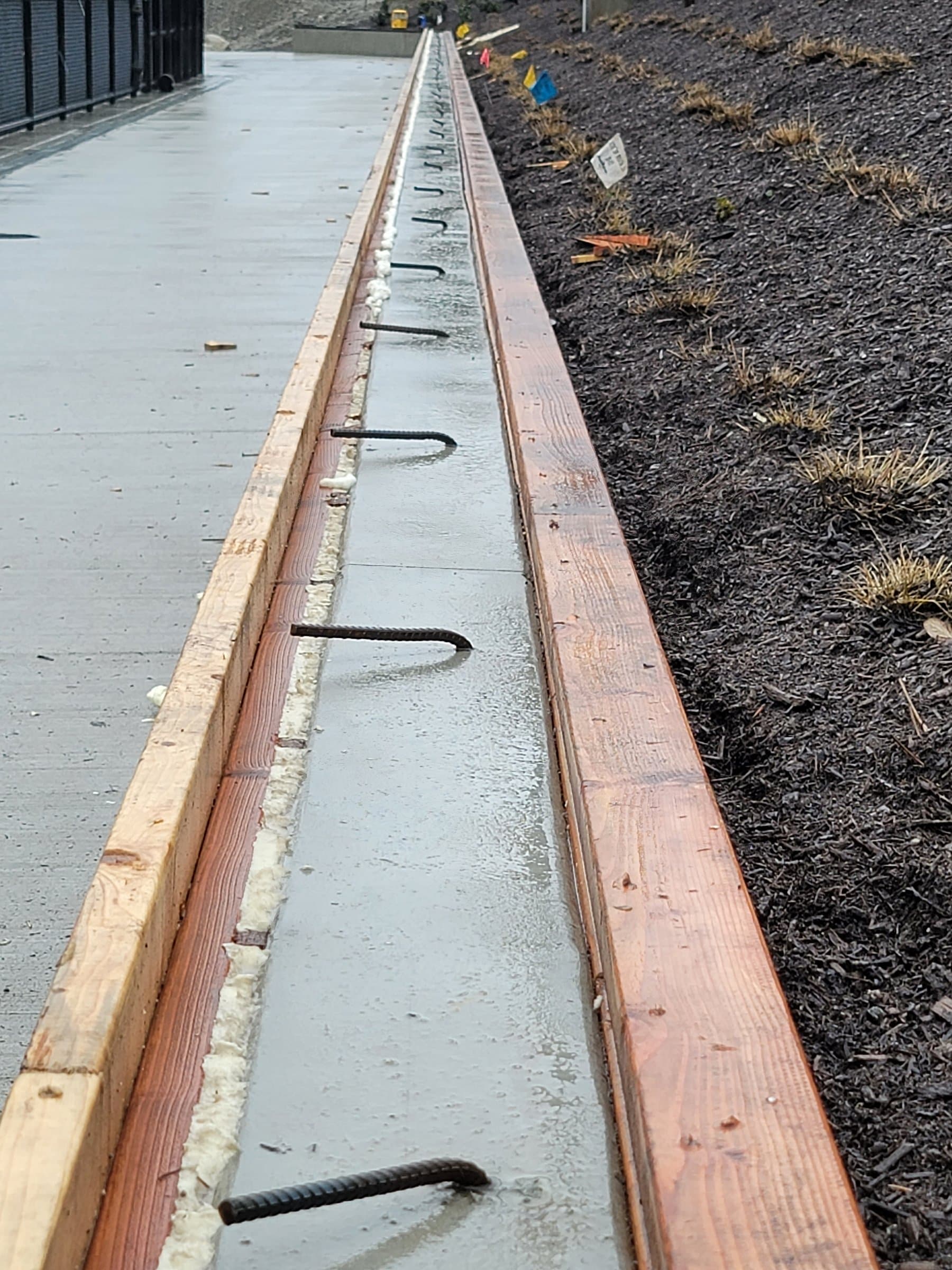
Real jobs, including the forms before the pour, which is the part you can't see once the concrete is in.
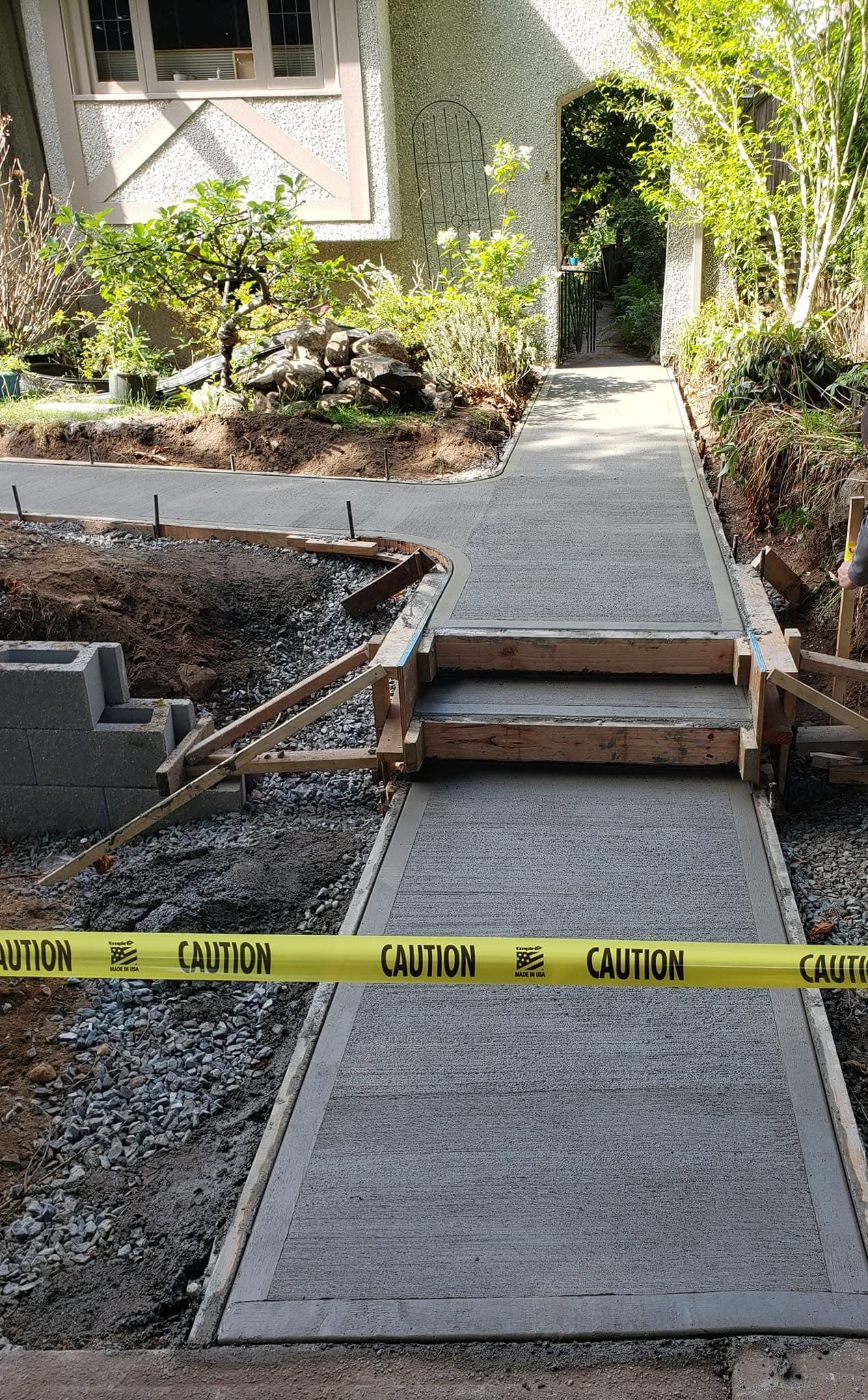
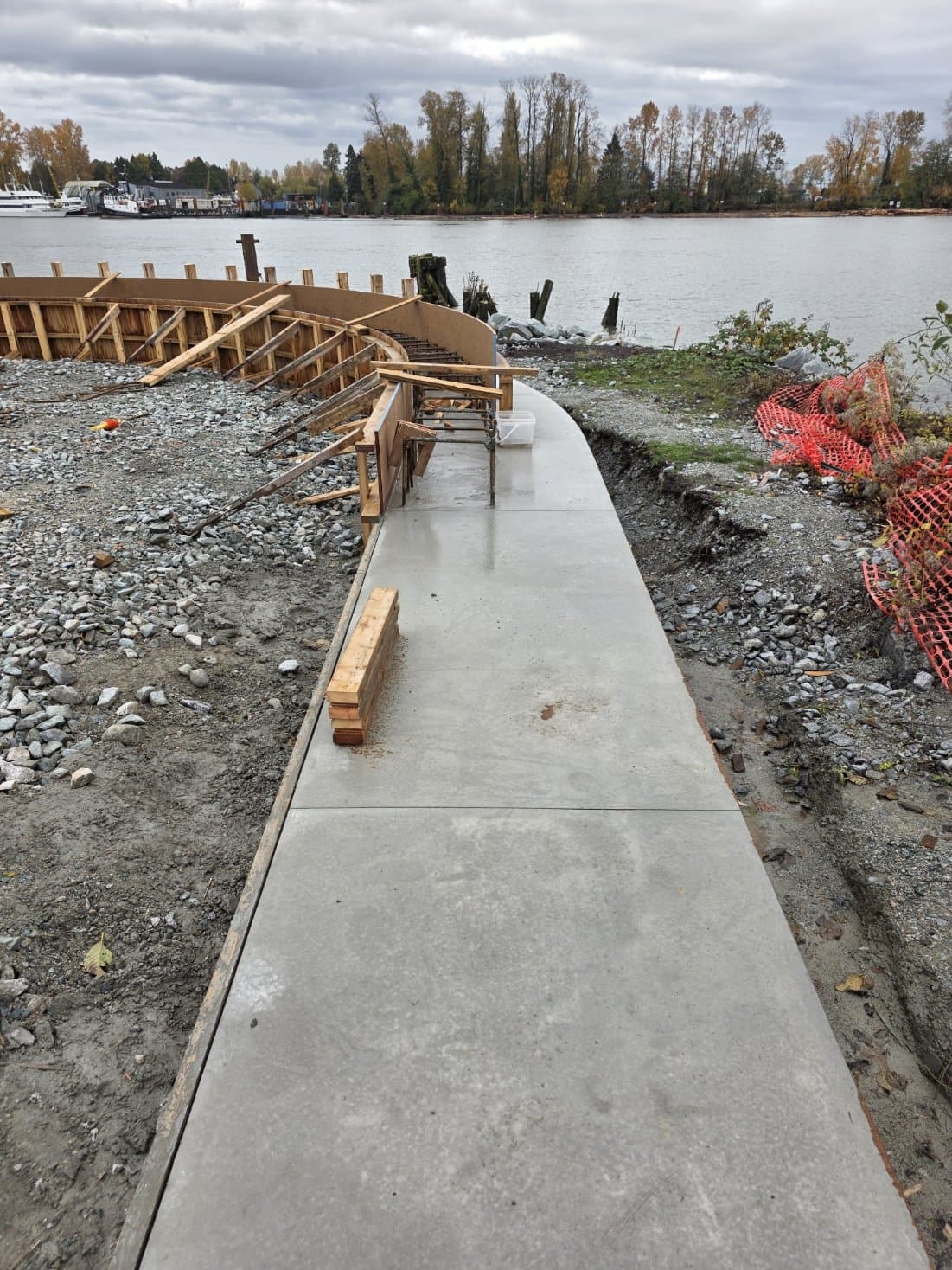
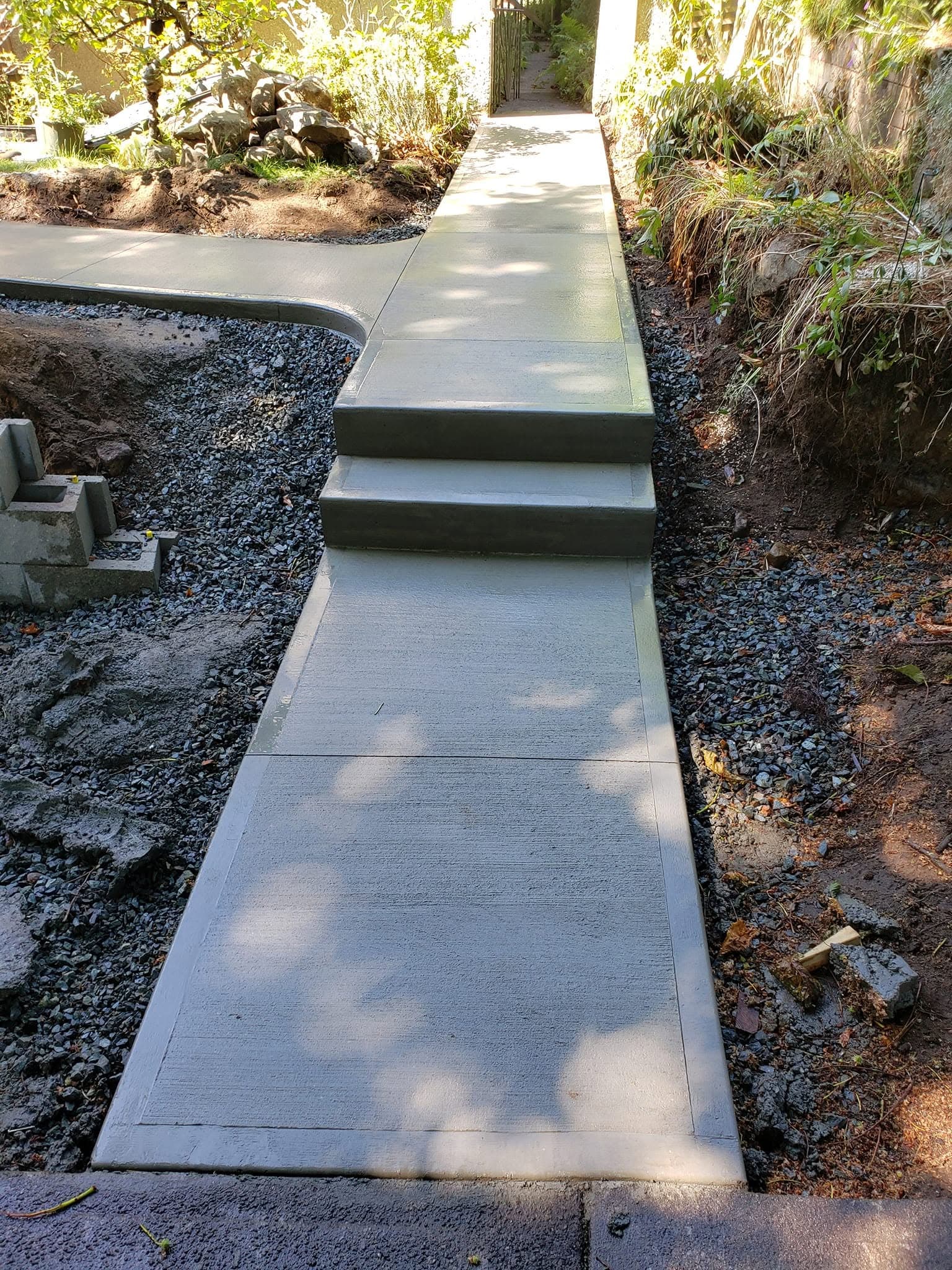
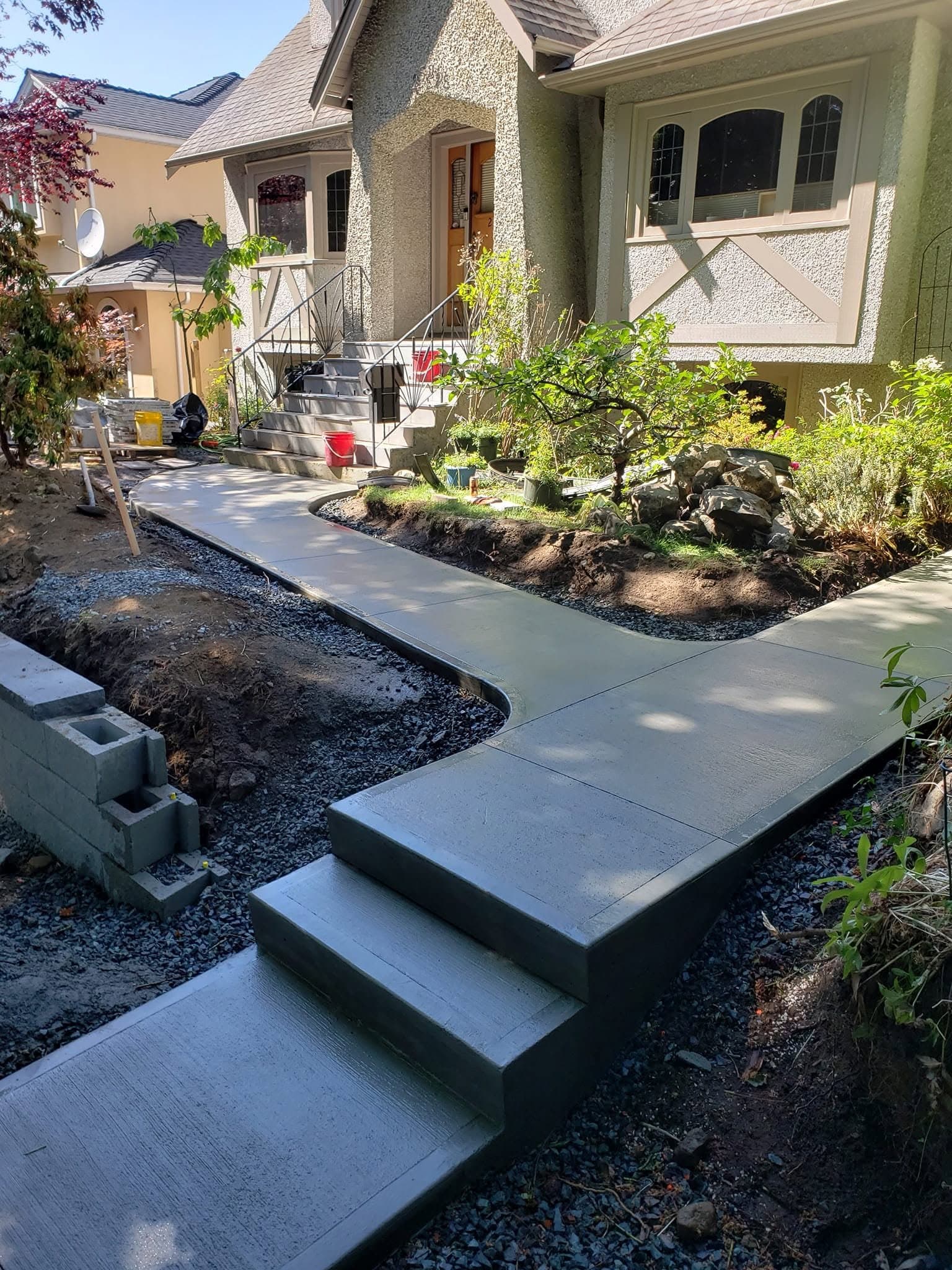
Replacing a gravel driveway with concrete means checking what's under the gravel, grading and compacting a proper base, then forming, reinforcing and pouring a slab sloped to drain. In Maple Ridge, any work on the part between your property line and the road also needs an application to the City's Engineering department first.
A concrete driveway costs more to put in than asphalt or gravel, it will crack somewhere, and de-icing salt and oil can mark the surface. A good base, the right thickness, control joints and sealing handle most of these, which is why concrete usually outlasts the alternatives.
Hairline cracks are normal and can be sealed, and a sound slab with a worn surface can be resurfaced. A driveway that has sunk, heaved or broken into pieces has a failed base, and replacing it is the only fix that lasts.
The cheapest fix is to clean out the cracks and seal them, which keeps water and salt out and stops them growing. It only works on a driveway that's still level and solid; if the slab has sunk or broken up, the base has failed and cheap fixes won't hold.
The apron or crossing is the part of the driveway between your property line and the road, and in most Lower Mainland cities it sits on City land and needs the City's approval before work starts. In Maple Ridge that means an application accepted by Engineering, with the City sizing any culvert under it and the applicant paying.
The apron of a driveway is the section where it meets the street, running from the road edge to your property line. The same word is used for the strip in front of a garage door, where the driveway meets the garage slab.
Light foot traffic after a couple of days, cars after about a week, and full strength at around a month. We give you the timing for your mix and the weather on pour day.
Broom finish is the standard, slip-resistant and most affordable. Stamped concrete is pressed with a pattern to look like stone or pavers. Exposed aggregate washes back the surface to show the stone in the mix. Price and upkeep go up from broom to decorative.
Not for the part on your lot, but the crossing between the property line and the road needs an application accepted by Maple Ridge Engineering, as does widening or adding a driveway.
Source: Maple Ridge Driveway Crossing, Culvert and Ditch Infill application
Surface wear and a few cracks can be repaired. A driveway that has sunk, heaved or broken into pieces has a failed base, and replacement is the only fix that lasts.
We don't estimate blind, because size, access, digging, steel and finish move the number more than the concrete does. Send a photo and rough measurements with the booking form and John will tell you what drives the price on your job, then give you a written estimate after the site visit.
Four steps, and nothing is ordered or dug until you sign off.
Call John, or tap Book now and send a photo of the spot with rough measurements if you have them.
John comes out, walks the site, checks access, slope and drainage, and tells you which permits and inspections the job needs.
You get a clear plan, the design and a written scope and estimate. Finishes are chosen and the build date is locked in before anything is ordered or any ground is broken.
Forms are set, inspected and poured. You get updates as we go and a clean site at the end.
Rather talk it through? Call John at (778) 200-8030 · All services
Builder or GC? Call John to talk through the project, or email the details and drawings to john@bedrockandcedar.com. How it works for builders